

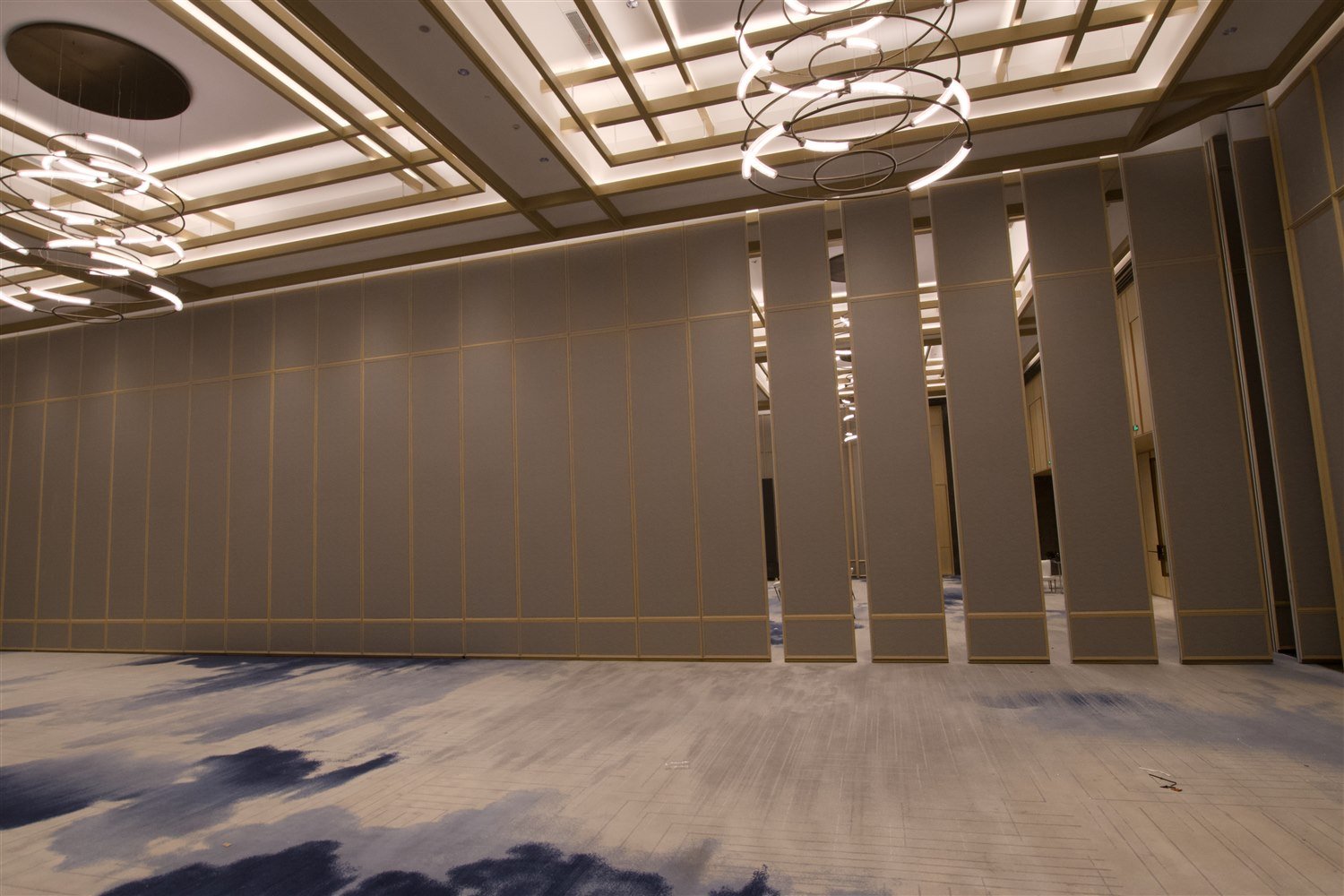
07 May Hotel Ballroom Movable Wall Layout Planning Guide
Hotel Ballroom Movable Wall Layout Planning Guide
Content basis: This guide is based on INDEE project experience with hotel ballroom operable partition walls, movable wall systems, top-hung tracks, acoustic seals, panel parking layouts, and overseas commercial project coordination.
Last updated: May 2026. The guide is for early planning. Final system selection should be confirmed with drawings, structural conditions, ceiling details, acoustic targets, finish requirements, and installation scope.
A hotel ballroom movable wall layout is decided before the wall is manufactured. The product may look like a line of panels, but the successful layout depends on opening dimensions, track route, panel parking, ceiling support, acoustic target, staff operation, and the way the ballroom is sold and used by the hotel.
This guide focuses on layout planning. For the broader product category, review INDEE's operable partition walls page. For a general hotel application overview, see Hotel Ballroom Operable Partition Walls. For daily use after installation, see the Hotel Ballroom Partition Wall Operation Checklist.
Quick answer: plan the room first, then choose the wall
The best hotel ballroom movable wall layout starts with the business use of the room. A ballroom that hosts weddings, banquets, training sessions, board meetings, and conference breakouts needs a different layout strategy from a simple meeting room. Before comparing products, define how many room modes the hotel needs, where the panels will park, how staff will move them, and what level of acoustic separation is expected when adjacent events run at the same time.
INDEE usually reviews the opening width and height, ceiling and support conditions, room-use plan, acoustic target, panel finish, parking direction, door requirements, project country, and installation responsibility before recommending a hotel ballroom partition system.
1. Start with ballroom use scenarios
The first planning question is not the panel thickness. It is how the hotel wants to use the ballroom. A large ballroom may need one full-open mode for weddings, two-room mode for parallel meetings, three-room mode for breakout sessions, and a banquet mode where service doors and guest routes stay clear.
If the use scenario is unclear, the wall may technically divide the room but still create operational problems. A panel stack may block a service door. A closure panel may land near a stage zone. A divided room may not match the hotel's normal banquet table layouts. The movable wall should support revenue and operations, not only close an opening.
| Planning question | Why it matters for layout |
|---|---|
| How many room modes are required? | This decides the number of openings, closure points, and track routes. |
| Will adjacent events run at the same time? | This affects acoustic target, seals, panel construction, and user expectations. |
| Where are service doors and guest entrances? | Panel parking and closure positions should not block staff or guest circulation. |
| Will the ballroom use stages, LED screens, or banquet tables? | The partition line should work with event setups, not fight them. |
| Who will operate the wall? | Hotel staff need a route and operation method that can be repeated safely. |
2. Measure the opening before choosing a system
Opening width and height are the two most visible inputs, but they are not enough by themselves. The project team also needs finished floor level, ceiling height, soffit conditions, beam location, nearby MEP services, wall pocket dimensions, and whether the building is new construction or an existing renovation.
A 3 m meeting-room partition and an 8.5 m hotel ballroom wall may both be movable walls, but they do not have the same track loading, panel structure, operation feel, or installation risk. The Xuzhou Fantawild Boonie Bears Hotel reference is useful here because the ballroom used a high opening with an acoustic target around 53 dB. Taller openings require more careful planning above the ceiling and during installation.
3. Plan panel parking early
Panel parking is one of the easiest details to underestimate. When the ballroom is open, every panel still needs to go somewhere. If the stack is poorly located, it can reduce usable floor area, block a service route, interrupt circulation, or create a weak-looking corner in a premium hotel interior.
| Parking option | When it can work | Planning risk |
|---|---|---|
| Straight stack beside the opening | Simple layouts with enough side space. | May remain visible to guests or reduce usable space. |
| Pocket parking | Premium ballrooms where panels should disappear visually. | Needs enough pocket depth, track coordination, and access for maintenance. |
| Remote parking | Large rooms where panels should move away from the main opening. | Requires a more complex track route and clear staff operation path. |
| Multiple parking zones | Ballrooms with more than one division line. | Needs precise sequencing so staff do not block one stack with another. |
The parking discussion should happen before ceiling drawings are frozen. Track routes, sprinkler locations, lights, ceiling access panels, and decorative ceilings can all affect where panels can move and park.
4. Match the acoustic target to real event use
Hotel ballrooms often need stronger acoustic planning than normal office partitions because adjacent spaces may host very different events. One side may hold a wedding banquet with music while the other side hosts a business meeting. A simple visual divider will not create the guest experience the hotel expects.
The target rating should be selected with the use case in mind. INDEE project references include hotel and convention applications around the low-to-mid 50 dB range, while some office partitions use lower targets. For more detail on this topic, read 45 dB vs 55 dB Movable Wall Systems.
Acoustic performance is also affected by surrounding construction. Even a strong movable wall can underperform if the side jambs, ceiling plenum, floor levelness, fixed wall, or installation tolerance are weak. The layout should therefore include the wall system and the surrounding building interfaces.
5. Coordinate ceiling structure and MEP services
Most hotel ballroom movable walls are top-hung systems. That means the ceiling area above the partition is a technical zone, not only decoration. The building must be able to support the track, carriers, moving panels, seals, and long-term operational loads.
Before quotation, the project team should check beams, hangers, HVAC ducts, sprinklers, lighting, speakers, projectors, smoke detectors, and ceiling access. If the ceiling design is already fixed, the movable wall supplier may have fewer track and parking options. Early coordination usually saves both cost and redesign time.
6. Choose finishes around hotel operations
Ballroom partitions are touched, moved, cleaned, and seen by guests. Finish planning should consider durability, stain resistance, visual match, repairability, and how the panels look when stacked. Fabric, laminate, veneer, metal trim, and custom finishes can all work, but the right choice depends on the hotel standard and maintenance plan.
The Hangzhou Liangzhu InterContinental Hotel reference shows why hotel projects should balance acoustic division with a premium interior appearance. A wall that performs technically but looks like an afterthought can weaken the ballroom experience.
7. Decide operation method and staff workflow
Manual sliding operation remains common in many hotel ballroom projects because it is understandable, reliable, and easier to maintain when the panel size and track quality are correctly planned. Automated or semi-automated options may be useful for some projects, but the layout still needs a clear staff workflow.
Staff should be able to open, close, lock, and park the panels without blocking guests or damaging finishes. The hotel also needs simple instructions for panel sequence, seal operation, cleaning, and inspection. Layout planning should include the people who will use the wall every week, not only the people who buy it once.
8. What should be included in a layout-based quotation?
A serious quotation should clarify more than square meters. Two proposals can look similar while using different track systems, seal details, panel construction, finish scope, packing methods, or installation support.
- Clear opening width and height, plus finished floor and ceiling information.
- Track layout, support condition, panel route, and parking position.
- Panel construction, acoustic target, seal type, side jambs, and closure method.
- Finish scope, frame color, accessories, drawings, packing method, and spare parts.
- Supply boundary, installation responsibility, supervision requirement, and documentation scope.
- Project country, delivery schedule, site access, and whether local installation is new-build or renovation.
Common hotel ballroom layout mistakes
| Mistake | Why it matters | Better planning choice |
|---|---|---|
| Treating the partition as only a price per square meter | It hides differences in track, seals, parking, finish, and support. | Compare the complete movable wall system and scope. |
| Leaving parking until late design | Panel stacks may block doors, reduce usable area, or conflict with ceiling services. | Mark parking zones and panel routes on plan drawings early. |
| Choosing acoustic target without event scenarios | The wall may not meet guest expectations during simultaneous events. | Define likely adjacent uses before selecting acoustic target. |
| Ignoring ceiling structure | Track support and MEP conflicts can delay the project. | Coordinate structural support and ceiling services before final quotation. |
| Planning operation without hotel staff input | The layout may be technically correct but difficult to use in daily events. | Review staff movement, storage route, and operation sequence. |
Related INDEE guides and references
- Operable Partition Walls for Commercial Projects
- Hotel Ballroom Operable Partition Walls
- Hotel Ballroom Partition Wall Operation Checklist
- 45 dB vs 55 dB Movable Wall Systems
- View INDEE hotel and convention project references
FAQ: Hotel Ballroom Movable Wall Layouts
When should the movable wall supplier join the hotel ballroom design process?
The supplier should join before ceiling and MEP layouts are fixed. Track support, panel route, parking location, access panels, lights, sprinklers, and speakers can all affect the final layout.
Is panel parking really part of the quotation?
Yes. Parking affects track route, carrier hardware, storage space, operation sequence, and sometimes the surrounding ceiling and wall details. A quotation without parking information may be incomplete.
What acoustic rating is suitable for hotel ballroom movable walls?
It depends on the event mix and guest expectation. Many hotel ballroom projects need stronger acoustic separation than ordinary meeting rooms, especially when two events may run at the same time. The surrounding walls, ceiling, floor, side jambs, and installation quality also affect real performance.
What drawings should be sent before asking for a layout recommendation?
Send plan drawings, opening dimensions, reflected ceiling plan if available, section drawings, acoustic target, intended room modes, preferred finish, panel parking direction, site photos, and project country.
Send ballroom drawings for layout review
If you are planning a hotel ballroom, banquet hall, convention hotel, or flexible event space, INDEE can review the opening conditions and recommend a movable wall layout before quotation. Share drawings, target acoustic rating, opening size, finish preference, ceiling condition, and panel parking requirements so the proposal matches the actual building.
