

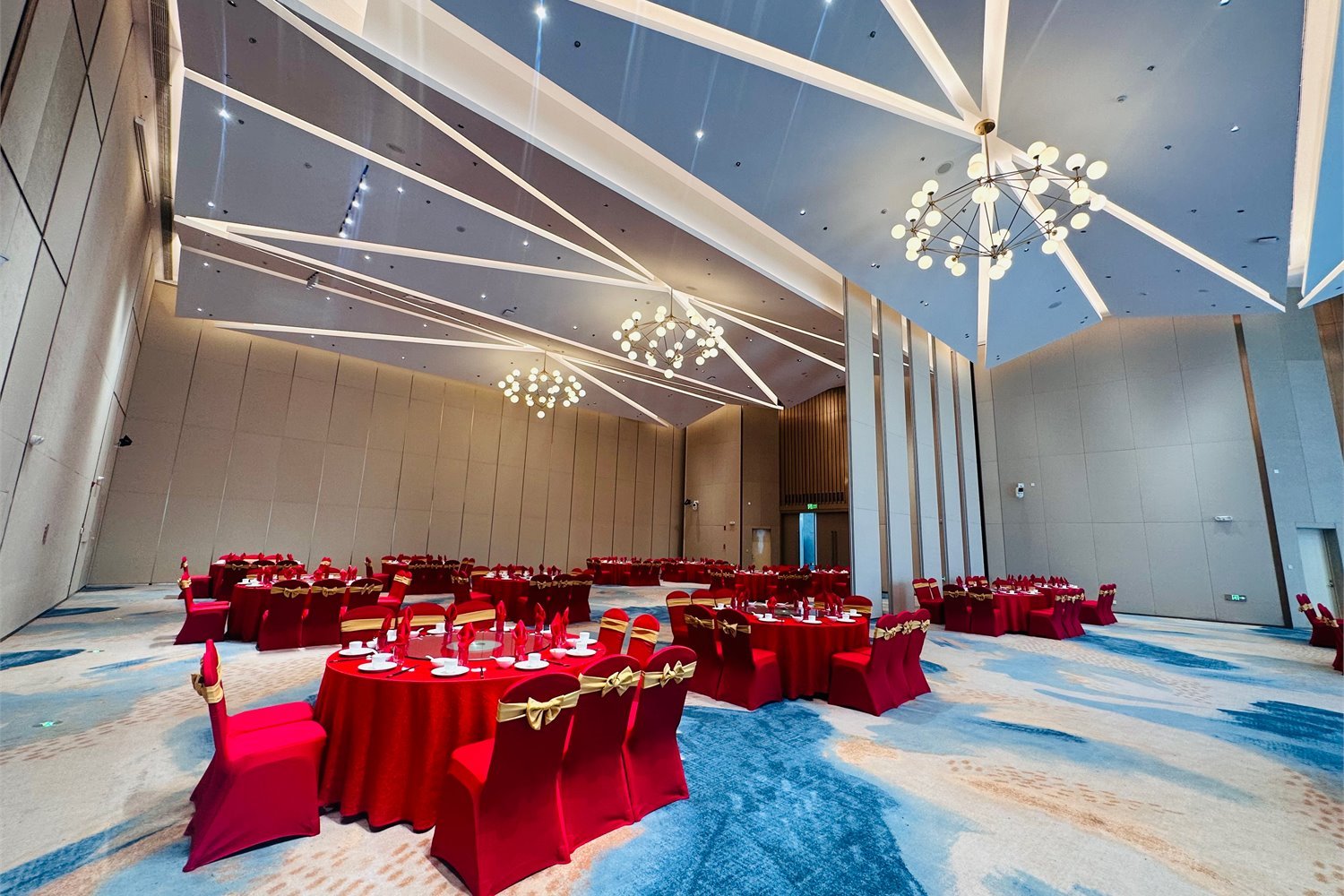
20 Apr Hotel Ballroom Partition Wall Operation Checklist
Hotel Ballroom Partition Wall Operation Checklist
Content basis: This guide is based on INDEE project references, operable partition specifications, and commercial flexible-space project experience.
Last updated: April 2026. Final hotel ballroom partition wall selection should be confirmed with project drawings, site conditions, acoustic targets, and local requirements before quotation.
Quick answer: A hotel ballroom partition wall should be specified for daily operation as much as for acoustic rating. Staff must be able to move panels smoothly, activate seals correctly, park panels without blocking service routes, and protect finishes after repeated events.
In this guide:
- Daily operation checks for banquet teams.
- Design decisions that make room changeover easier.
- Project references and inquiry data for hotel ballroom quotations.
Hotel buyers often compare partition walls by panel thickness, finish, and acoustic rating. Those points matter, but the long-term guest experience depends on operation. If the track is difficult to use, if panels are parked in the wrong zone, or if seals are not fully engaged, the wall will not deliver the acoustic privacy that the design team expected.
For a hotel owner or purchasing team, the practical question is not only “what partition wall should we buy?” It is also “can our banquet team operate this system every week without damaging panels, delaying room turnover, or disturbing guests in the adjacent function room?”
Daily Operation Checklist for Banquet Teams
| Track route | Panels should move without sudden resistance. Confirm the track is clean and that lights, speakers, signs, or ceiling details do not block the route. |
|---|---|
| Panel sequence | Operators should follow the correct panel order. A wrong sequence can make the final panel difficult to close and can reduce acoustic contact. |
| Seal engagement | The acoustic rating depends on top, bottom, and side seals. Staff should confirm each seal is fully activated after the wall is closed. |
| Parking area | Panels should not block service doors, guest flow, banquet carts, emergency routes, or furniture storage during fast room changeover. |
| Surface protection | Hotel finishes are exposed to frequent cleaning and impact. Staff should avoid pushing carts against panel edges and use the correct cleaning method. |
Design Decisions That Make Operation Easier
A good ballroom partition design starts before production. Track layout, panel count, parking method, pass-door position, finish selection, and operating hardware should match the hotel's event routine. A wall that looks clean on drawings can still create problems if the panels must cross a busy service route or if the stack location conflicts with banquet furniture storage.
For taller ballrooms, operators need clear instructions on panel order and seal use. For luxury hotels, the finish also has to resist repeated handling. Fabric, laminate, veneer, metal, and customized decorative surfaces all require different cleaning expectations.
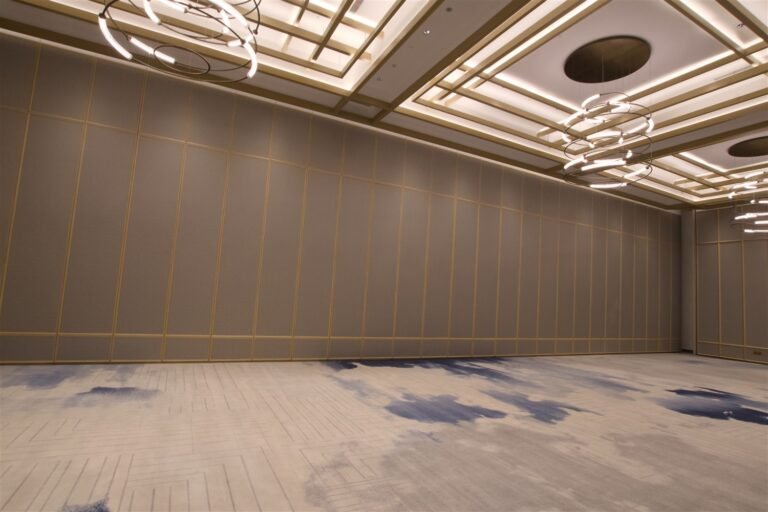
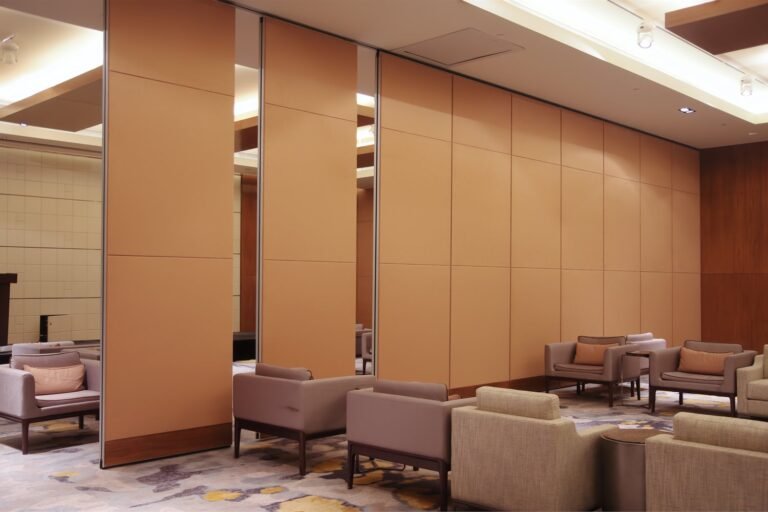
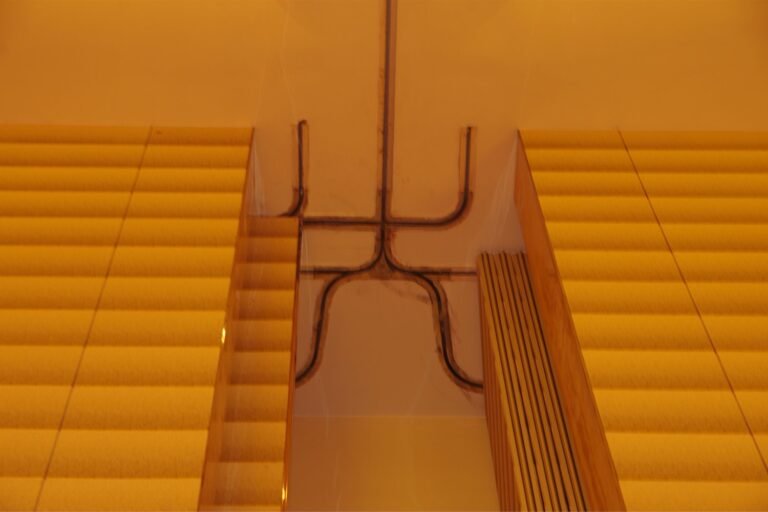
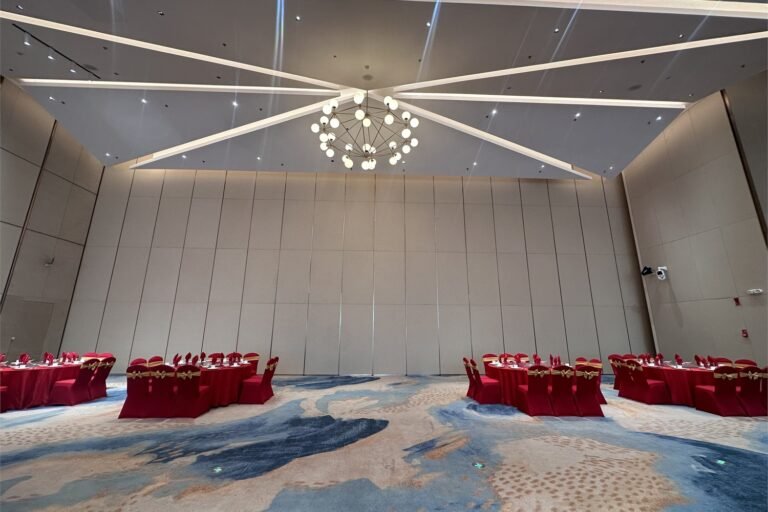
Project References for Hotel Operation
What to Include in a Hotel Partition Inquiry
- Clear opening width and finished ceiling height.
- Required acoustic target or room separation requirement.
- Ceiling structure information for track support.
- Preferred panel parking location and service circulation constraints.
- Finish direction, such as fabric, veneer, laminate, metal, or custom decorative panel.
- Expected operation frequency and whether staff training is required.
Common Mistakes That Reduce Operating Performance
The most common hotel mistake is treating the partition as a decorative wall rather than an operating system. A beautiful finish cannot solve a poor parking location, weak track support, or unclear staff procedure. The second mistake is asking for a high acoustic rating without checking whether the surrounding ceiling, side walls, doors, and floor conditions can support that target.
Another common problem is underestimating changeover pressure. In a busy hotel, the banquet team may need to divide or reopen a ballroom between events, sometimes while furniture, lighting, audio equipment, and catering teams are also moving through the same space. If the panel route is not planned around real operations, the system can become a daily inconvenience even when the product itself is well made.
Maintenance Rhythm After Handover
| Weekly | Check track cleanliness, panel movement, surface damage, and whether staff are following the correct operating sequence. |
|---|---|
| Monthly | Inspect seal activation, panel alignment, pass doors, handles, and visible hardware. Record any unusual noise or resistance. |
| Before major events | Confirm the parking zone is clear, the final closing panel can lock smoothly, and adjacent room functions will not conflict. |
| After renovation | Recheck ceiling services, carpet transitions, wall finishes, and track access because surrounding construction can affect operation. |
FAQ: Hotel Ballroom Operation
Can one person operate a hotel ballroom partition wall?
Many manual operable wall systems can be designed for trained single-person operation, but this depends on panel size, height, weight, track route, and parking layout. Large or complex banquet halls may require two operators for safer and faster room turnover.
Does poor operation affect sound insulation?
Yes. Even a high-rated panel system can underperform if seals are not fully activated or if panels are not aligned correctly. Operation training is part of acoustic performance.
Should hotels choose automatic systems?
Automatic systems can be useful for selected premium spaces, but most hotel ballrooms still use manual or semi-automatic systems because they are easier to maintain and more cost-effective. The best choice depends on opening size, event frequency, and maintenance capacity.
Send Drawings for a Project-Based Recommendation
INDEE can review opening dimensions, ceiling conditions, acoustic targets, panel parking, finish requirements, and operation expectations before recommending a system. This helps the quotation match the building instead of becoming only a square-meter price.
