

07 Dec Hotel Ballroom Operable Partition Walls
Hotel Ballroom Operable Partition Walls
Content basis: This guide is based on INDEE project records, operable partition specifications, and commercial flexible-space project experience.
Last updated: April 2026. Final acoustic and system selection should be confirmed with project drawings, site conditions, and local requirements before quotation.
Quick answer: Start with the ballroom's event scenario, acoustic target, opening size, track route, and panel parking before comparing finishes or square-meter prices.
In this guide:
- How to define a hotel ballroom acoustic target.
- Why height, track loading, and panel parking change the system selection.
- What drawings and project data INDEE needs before a serious quotation.
A hotel ballroom operable partition wall is not only a movable panel. For hotel owners, architects, contractors, and procurement teams, it is a revenue tool: one large ballroom can become two banquet rooms, a meeting and dinner setup, a wedding hall plus a preparation area, or several training spaces during the same day.
The risk is that many projects start from the wrong question. Buyers ask for a square-meter price or a panel finish before the acoustic target, opening size, ceiling structure, track path, and panel parking have been checked. That usually creates a quotation that looks simple but cannot fully answer whether the system will work in the real ballroom.
This guide explains how to evaluate an operable partition wall for hotel ballrooms using the same type of project data INDEE reviews before recommending a system.
1. Start With the Ballroom Business Scenario, Not the Panel
The first question is operational: what does the hotel need to sell after the wall is installed?
- One full-size banquet hall for weddings, conferences, and exhibitions.
- Two or more smaller rooms running different events at the same time.
- A divisible ballroom that can change layout quickly between lunch, meeting, dinner, and evening event setups.
- A premium interior finish that looks permanent when the wall is closed.
- A storage plan that hides panels without blocking guest circulation or service routes.
Once this use scenario is clear, the technical specification becomes much easier to define. A wall used only for visual division can be very different from a wall that must separate two simultaneous banquet events with speech, music, catering noise, and guest movement on both sides.
2. Define the Acoustic Target by Real Simultaneous Use
For hotel ballrooms, the acoustic rating should be selected according to the noise situation, not because a higher number looks better on paper. If two meetings are held side by side, speech privacy may be the main issue. If one side holds a wedding banquet and the other side holds a business conference, the acoustic requirement becomes more demanding.
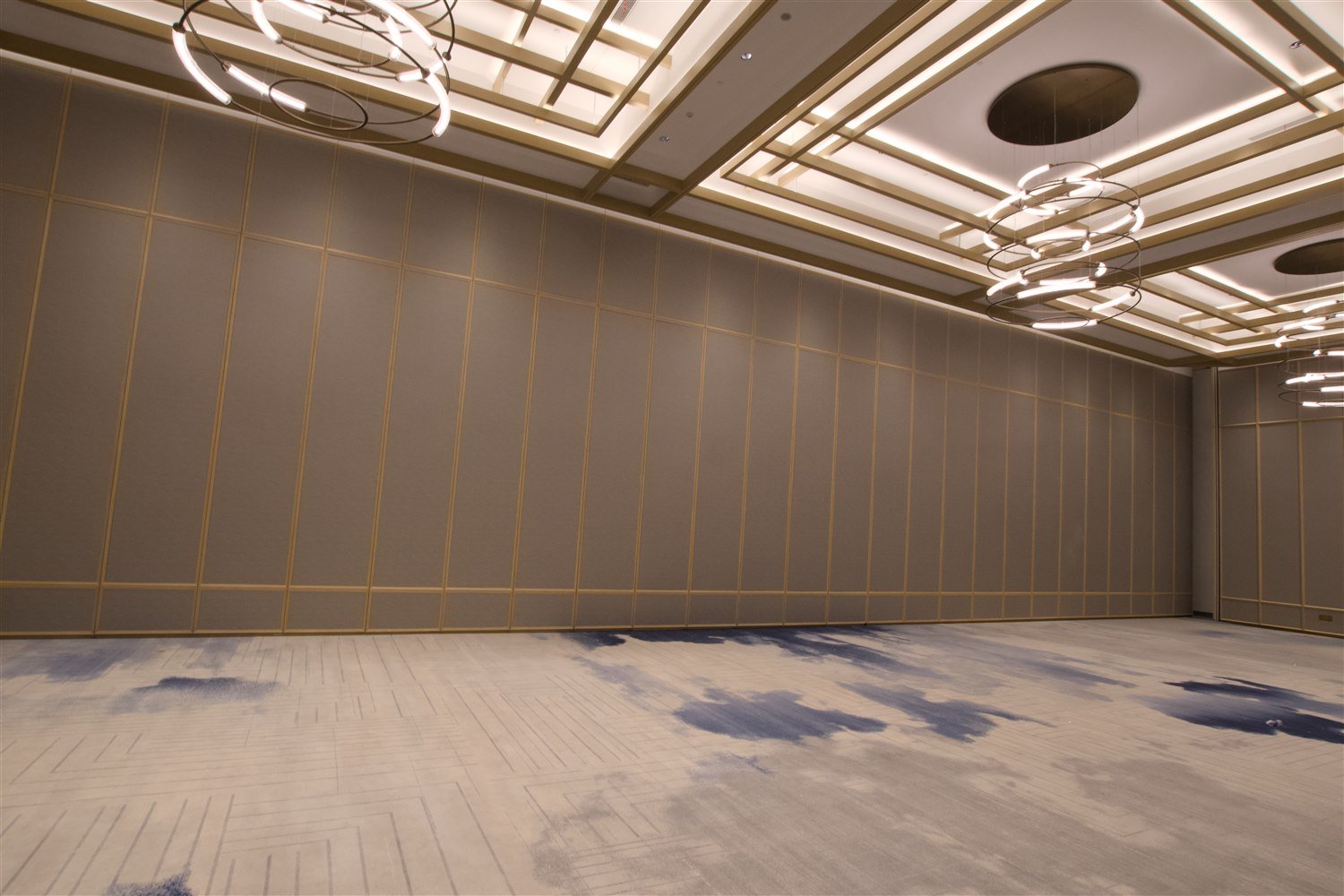
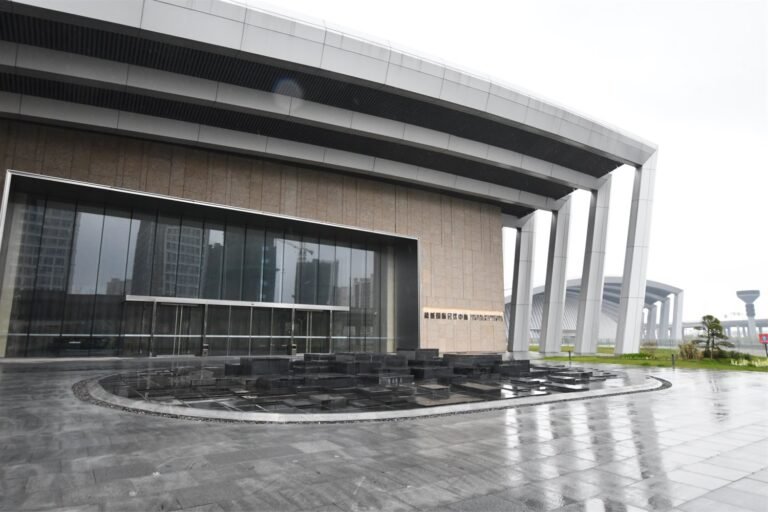
The Xuzhou Fantawild Boonie Bears Hotel project is a useful reference. INDEE supplied an INDEE 97 operable partition wall for a large ballroom, with a target acoustic rating around 53 dB. This level is relevant for hotels that expect adjacent events to run with stronger acoustic separation than a normal office meeting room.
| Reference project | Xuzhou Fantawild Boonie Bears Hotel |
|---|---|
| Application | Hotel / large ballroom |
| System | INDEE 97 Operable Partition Wall |
| Target acoustic rating | 53 dB |
| Opening size | 8.5 m high x 23 m wide |
| Track and parking | top-hung track with storage pocket |
| Operation | manual sliding operation |
| Panel quantity | 19 panels / approx. 1.2 m panel width |
| Finish | fabric upholstered panel |
Important point: the acoustic number is only one part of the system. The final result also depends on panel core, vertical seals, top and bottom seals, side jambs, surrounding fixed walls, floor levelness, and installation tolerance. A strong panel cannot compensate for weak details around the opening.
3. Opening Height Changes the Whole Engineering Decision
Height is one of the biggest cost and risk drivers in a ballroom partition project. A 3 m meeting-room wall and an 8.5 m hotel ballroom wall are not the same product with different dimensions. Taller panels need stronger internal construction, more careful track loading, more stable vertical alignment, and better coordination above the ceiling.
In the Xuzhou hotel reference, the opening was about 8.5 m high and 23 m wide. That immediately affects panel size, track layout, suspension, installation method, storage pocket volume, and operating force. It is also why INDEE asks for architectural plans before treating a quotation as final.
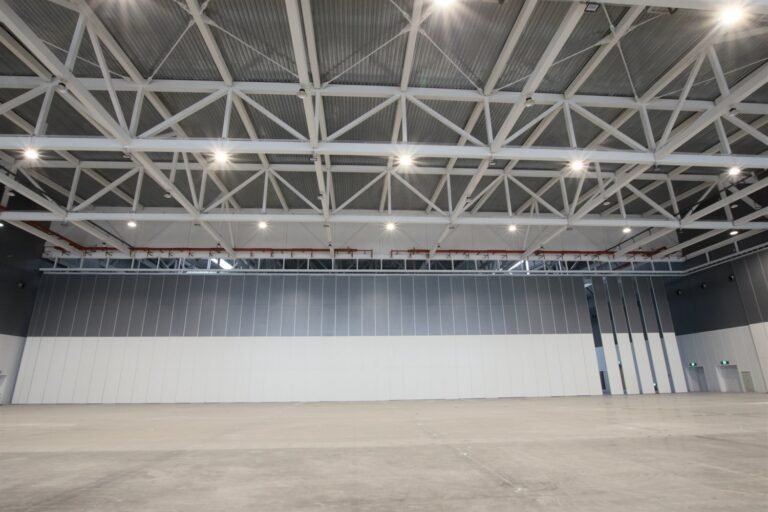
For even larger public venues, the engineering requirements increase again. INDEE's Shaoxing Convention Center reference used an INDEE 100 ultra-high system with an opening around 10 m high x 36 m wide and a 55 dB target. The Yancheng Yellow Sea Wetland Convention Center reference also reached about 10 m height and 32 m width.
4. Track Layout and Panel Parking Can Decide Whether the Ballroom Feels Premium
Panel parking is one of the most underestimated details in hotel ballroom design. When the wall is open, the panels still need to go somewhere. If the parking area is placed poorly, it can reduce usable banquet space, block a service door, interrupt guest circulation, or create an awkward visual corner in an otherwise premium interior.
- Mark the main partition line and clear opening width on plan.
- Confirm the track route from closed position to storage pocket.
- Check guest entrances, service doors, buffet routes, and emergency egress paths.
- Coordinate speakers, sprinklers, smoke detectors, lighting, access panels, and air diffusers.
- Confirm structural points above the ceiling that can support the top-hung track.
5. Manual, Semi-Automatic, or Fully Automatic Operation
Manual operation is still common for many hotel ballroom projects because it can be reliable, understandable for staff, and easier to maintain. The Xuzhou hotel reference used manual sliding operation with a top-hung track and storage pocket. Manual does not mean low-end; it still requires stable track movement, correctly balanced panels, durable seals, and training for hotel staff.
For special cases, semi-automatic or fully automatic systems may be worth considering. The Shanghai World Expo Exhibition Hall reference used a fully automatic system with touch-screen control for a smaller opening, where fast operation and convenience were part of the project value.
| Manual operation | Often suitable for hotel ballrooms when panel weight, track quality, storage route, and staff training are correctly planned. |
|---|---|
| Semi-automatic operation | Useful when sealing or operating assistance is needed but the project does not require a fully automatic system. |
| Fully automatic operation | Best discussed for special design goals, frequent operation, limited staff handling, or premium automation requirements. |
6. Finish Selection Should Serve Both Interior Design and Maintenance
Hotel ballroom partitions must look permanent when closed. Fabric upholstered panels are common because they can integrate with banquet interiors and soften the visual appearance of a large wall. Veneer, laminate, metal, painted steel, glass, and custom surfaces may also be considered depending on the design intent.
- Check how the wall aligns with surrounding wall panels, skirting, ceiling lines, and lighting.
- Confirm whether the finish can tolerate frequent movement, staff handling, and event setup activity.
- Review how easy the surface is to clean, repair, or replace after years of hotel use.
- Decide whether vertical panel joints should be minimized or used as part of the interior rhythm.
- Understand how the finish affects panel weight, acoustic configuration, and production lead time.
7. Specification Checklist Before Requesting a Quotation
| Drawings | Architectural plan, reflected ceiling plan, section/elevation if available, and the marked partition location. |
|---|---|
| Opening size | Clear opening height, clear opening width, finished floor level, and ceiling build-up. |
| Acoustic target | Required STC or dB target, or a description of simultaneous-use conditions if the exact rating is not known. |
| Panel parking | Preferred storage pocket position, parking direction, and any route constraints. |
| Operation | Manual, semi-automatic, or automatic preference, plus how often hotel staff will move the wall. |
| Finish | Fabric, laminate, veneer, metal, painted panel, or reference images for the interior design. |
| Doors and hardware | Pass door requirement, storage room door, access control, handles, and any special hardware finish. |
| Project location | Country, city, project phase, shipping expectation, and whether installation guidance documents are required. |
8. Common Mistakes in Hotel Ballroom Partition Projects
- Comparing only square-meter prices. Two quotations can look similar while using very different track, seal, panel, and parking solutions.
- Choosing a high acoustic number without checking the surrounding construction. The fixed walls, floor, side jambs, and ceiling interface must support the target.
- Leaving panel parking until late design stage. Parking affects the plan, the ceiling, the service route, and the guest experience.
- Ignoring operation after handover. Hotel staff need a system they can operate safely during real event turnover.
- Freezing the ceiling before track coordination. Lighting, sprinklers, speakers, and access panels can conflict with the partition route.
How to Judge Whether a hotel ballroom operable wall Proposal Is Serious
A professional partition proposal should do more than repeat a product name and a square-meter price. For commercial projects, the supplier should connect the system selection to drawings, opening dimensions, acoustic target, finish expectations, operation method, panel parking, and installation conditions.
If a supplier can only quote from a rough area number, the price may still be useful for early budgeting, but it should not be treated as a final technical proposal. The final recommendation should explain why a certain system, frame depth, track route, seal configuration, glass or panel specification, and finish package is suitable for the project.
| Budget price | Useful for early feasibility, but usually based on limited information and should be treated as a rough reference. |
|---|---|
| Technical proposal | Should be based on drawings, opening dimensions, acoustic target, operation method, finish, parking, and interface conditions. |
| Engineering review | Should identify risks such as ceiling conflicts, weak surrounding construction, insufficient parking space, or unclear door/hardware details. |
| Quotation confidence | Improves when the buyer provides plans, sections, reflected ceiling drawings, site photos, and required performance targets. |
This is also why INDEE prefers drawing-based communication before final pricing. A more careful early review reduces later design changes, acoustic disappointment, installation conflict, and unclear responsibility between supplier, contractor, and project owner.
9. Related INDEE Project References
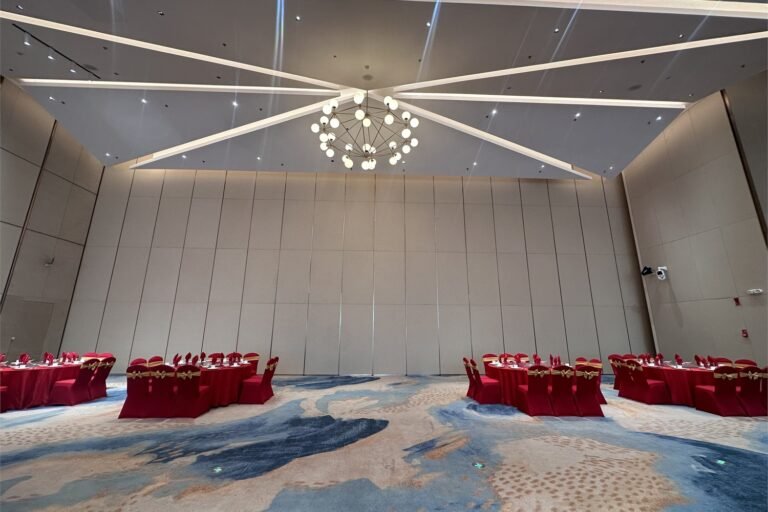
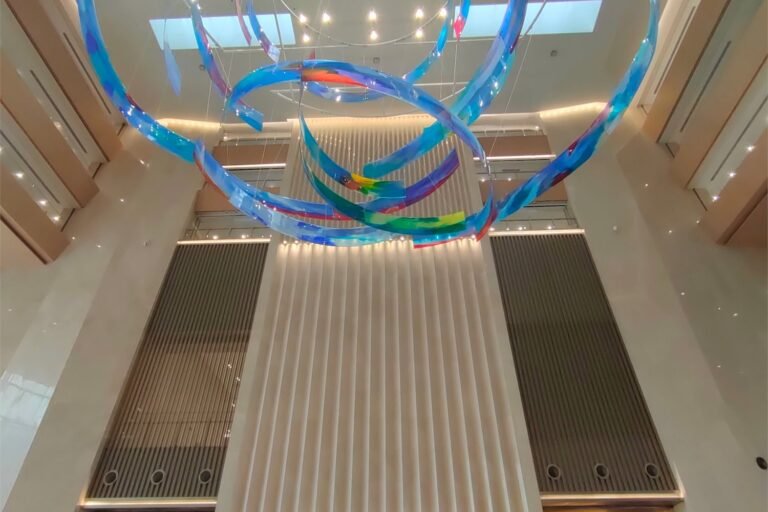
These references help buyers compare hotel, corporate, and large-venue requirements instead of reading the ballroom wall as an isolated product:
FAQ: Hotel Ballroom Operable Partition Walls
What acoustic rating is usually needed for a hotel ballroom operable wall?
It depends on whether adjacent events will run at the same time. Many hotel ballroom projects need stronger acoustic separation than ordinary office partitions. The Xuzhou hotel reference used a target around 53 dB, but the final recommendation should be based on room volume, event type, surrounding construction, and the client's expectation for simultaneous use.
Should panel parking be planned before interior design is finalized?
Yes. Parking affects usable floor area, ceiling coordination, guest circulation, service routes, and the appearance of the ballroom when the wall is open. It should be reviewed before the ceiling and interior details are frozen.
Can a manual system work for a high ballroom opening?
Manual operation can work when the panel size, track quality, storage pocket, sealing method, and staff workflow are correctly planned. For very frequent operation or special service requirements, semi-automatic or electric options can also be evaluated.
Send Drawings for a Project-Based Recommendation
If your project involves hotel ballrooms, convention centers, corporate offices, clean rooms, archives, or other flexible commercial spaces, INDEE can review the opening conditions and recommend a suitable partition system. Share drawings, target acoustic rating, opening size, finish preference, and panel parking requirements so the proposal matches the actual building instead of a generic product list.
