

18 Jun Acoustic Operable Walls for Commercial Projects
Acoustic Operable Walls for Commercial Projects
Content basis: This guide is based on INDEE project experience with commercial operable partition walls, acoustic movable wall systems, top-hung tracks, panel seals, side jambs, ceiling coordination, and overseas B2B quotation support.
Last updated: May 2026. Acoustic recommendations should be confirmed with drawings, opening dimensions, target dB requirements, surrounding construction, site conditions, available test-report data, and installation responsibility.
Acoustic operable walls are movable partition systems planned for flexible commercial spaces where room division and acoustic separation both matter. The wall is not only a row of panels. A real acoustic system includes panel construction, top track, carriers, vertical seals, retractable top and bottom seals, side jambs, closure details, floor and ceiling interfaces, and a parking plan for the panels when the room is open.
For the broader product category, start with INDEE's operable partition walls page. As a factory-direct manufacturer, INDEE uses drawing review and project conditions to recommend a complete system rather than only a panel type. This guide focuses on how to plan the acoustic side of the system before a quotation is compared or a drawing package is issued.
Quick answer: acoustic performance is a complete assembly question
The most important question is not whether a panel has a large dB number in isolation. The practical question is whether the complete room division can support the target acoustic result for the way the space will be used. Panel core, seal design, track precision, side jambs, floor levelness, ceiling plenum conditions, installation tolerance, and surrounding walls all influence the real project outcome.
That is why INDEE reviews opening size, ceiling support, side conditions, acoustic target, room use, panel parking, finish requirements, and project location before recommending an acoustic operable wall system. A 45 dB office meeting room and a 55 dB hotel ballroom target should not be quoted as if they were the same project.
What acoustic operable walls are used for
Acoustic operable walls are common in commercial spaces that need more than visual separation. Hotels use them to divide ballrooms and banquet halls. Convention centers use them to create multiple halls or breakout rooms. Corporate offices use them to change meeting room sizes. Training rooms and public venues use them when schedules change and adjacent activities may happen at the same time.
| Application | Typical acoustic concern | Planning focus |
|---|---|---|
| Hotel ballroom | Banquet, meeting, and event uses may run side by side. | Room modes, panel parking, seals, side jambs, and staff operation. |
| Convention center | Large halls need flexible layouts without weak acoustic interfaces. | Ultra-high openings, track support, carrier movement, and installation tolerance. |
| Corporate office | Meeting rooms need privacy without permanent fixed construction. | Moderate dB targets, clean finishes, easy operation, and office circulation. |
| Training room | Speech clarity and adjacent-room distraction control matter. | Balanced acoustic target, simple operation, and durable finishes. |
| Public venue | Schedules change and room use may vary by event type. | System flexibility, clear responsibility boundaries, and maintenance access. |
How to choose a dB target
A higher dB target is not automatically the right specification. It can add weight, cost, hardware requirements, and installation sensitivity. The target should match actual room use. If adjacent spaces only hold similar training sessions, a moderate target may work. If one side hosts music, banquets, or confidential meetings while the other side needs speech privacy, a stronger target may be required.
INDEE usually uses terms like target acoustic rating or dB target because final performance depends on the complete assembly and site conditions. For a deeper buyer comparison, see 45 dB vs 55 dB Movable Wall Systems.
| Planning range | Typical use case | Important note |
|---|---|---|
| Around 43-45 dB target | Office meeting rooms, collaborative zones, smaller flexible rooms. | Often enough for visual division plus moderate speech privacy, depending on surrounding construction. |
| Around 45-50 dB target | Private meeting rooms, training rooms, mixed office and hospitality spaces. | Requires better seal control and careful installation detail. |
| Around 50-55 dB target | Hotel ballrooms, convention halls, premium meeting spaces. | Needs stronger panel construction and very careful track, seal, jamb, and site coordination. |
| Project-specific target | Large openings, unusual ceiling conditions, or sensitive adjacent uses. | Should be reviewed with drawings and available test-report-supported data. |
Why panels alone do not decide acoustic performance
A panel may be built for a target acoustic range, but sound can still travel through weak points around the wall. Common weak points include side jamb gaps, uneven floors, ceiling plenum paths, poorly adjusted retractable seals, installation tolerances, and fixed walls that do not match the partition target.
For this reason, a quotation should clarify the complete system rather than only listing square meters. If two suppliers quote the same opening, one proposal may include stronger seals, better carrier hardware, detailed side jambs, and a clearer installation boundary, while another may only quote basic panels.
Track precision and ceiling support matter
Most acoustic operable walls are top-hung systems. The track carries the moving panels and controls how the panels meet each other when closed. If the support structure is weak or the track route is not coordinated with beams, HVAC ducts, lights, sprinklers, speakers, and access panels, the wall can become harder to operate and harder to seal.
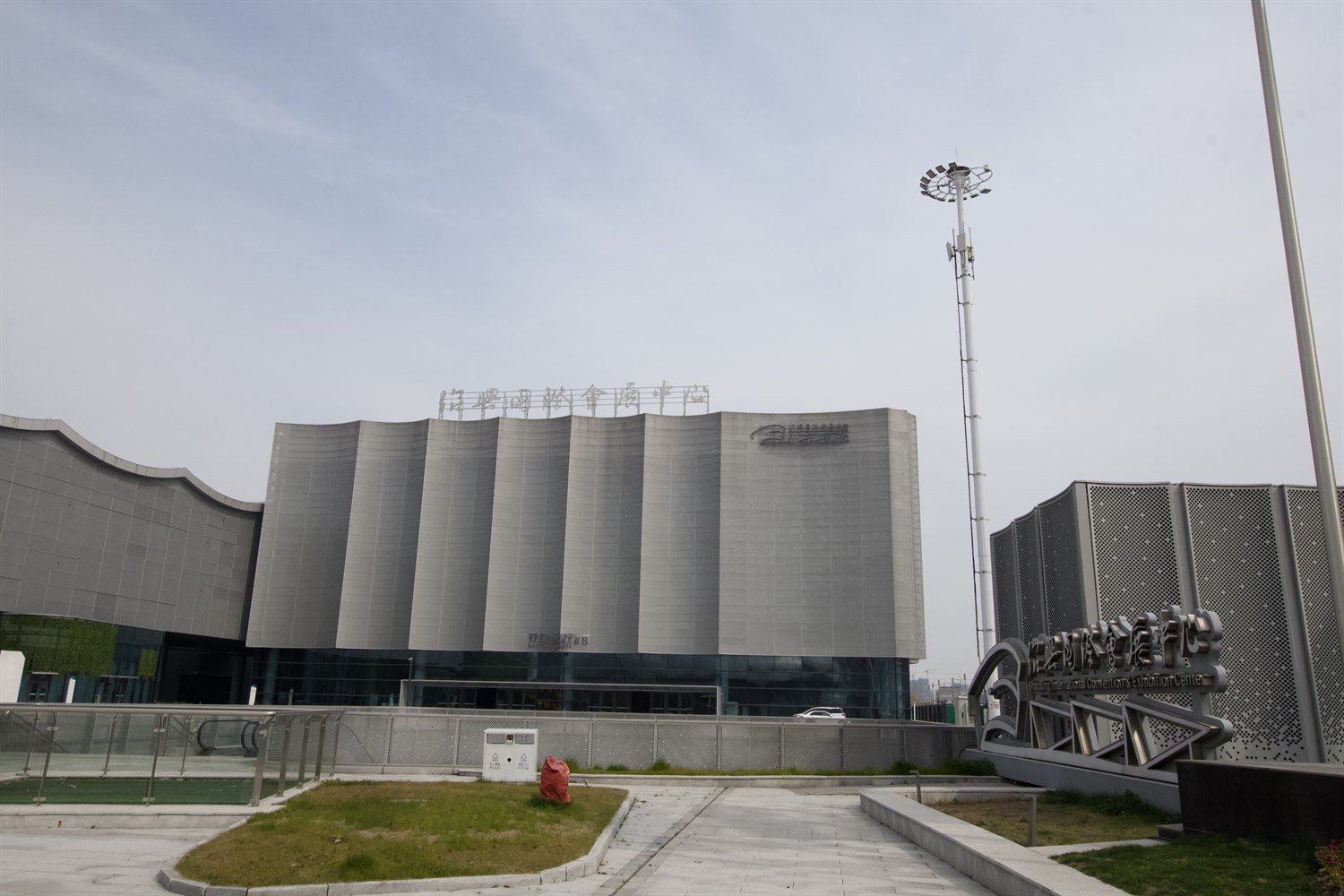
Large venues need especially careful review. The Shaoxing Convention Center reference is useful because ultra-high operable partitions require close coordination between track support, opening height, panel movement, and project installation. For a broader convention application, see Movable Wall Systems for Convention Centers.
Side jambs, closure panels, and floor conditions
Acoustic separation often fails at the edges before it fails through the center of the panel. Side jambs need to receive the wall cleanly. Closure panels need to lock or seal as intended. Floors should be level enough for bottom seals to work consistently. Adjacent fixed walls and ceilings should not create open paths around the movable wall.
This is why acoustic operable wall planning should involve both the partition supplier and the project team. Architects, contractors, and owners should confirm which party is responsible for structural support, surrounding wall preparation, ceiling closure, side jamb work, installation, adjustment, and final operation training.
Panel parking still affects acoustics
Panel parking may look like an operational detail, but it can affect acoustic planning. The track route, junctions, parking pocket, and movement sequence all influence the final layout. In hotels and event spaces, the parking location should not block doors, service routes, or guest circulation. For hotel-specific layout planning, review Hotel Ballroom Movable Wall Layout Planning Guide.
The Hangzhou Liangzhu InterContinental Hotel reference shows how hotel projects need both acoustic division and a clean interior result. The wall has to support room revenue, guest experience, and staff operation, not only close an opening.
What to include in an acoustic operable wall quotation request
A good request for quotation should give the supplier enough information to recommend a system instead of guessing. This is especially important for overseas B2B projects where drawings, packaging, documentation, site installation, and project responsibility boundaries need to be clear before production.
- Opening width and height, finished floor level, ceiling height, and section drawings where available.
- Target acoustic rating or expected adjacent room use, such as meetings, banquets, training, music, or conference sessions.
- Plan drawings showing wall line, side jambs, panel parking position, door locations, and circulation routes.
- Ceiling plan showing beams, HVAC, sprinklers, lights, speakers, projectors, and access panels near the track route.
- Finish preference, panel face material, frame color, hardware expectations, and durability requirements.
- Project country, delivery schedule, export packing requirements, installation responsibility, and required documentation.
Common mistakes when specifying acoustic operable walls
| Mistake | Why it creates risk | Better approach |
|---|---|---|
| Asking only for the highest dB number | It may add cost without solving the actual room-use problem. | Match the dB target to adjacent activities and buyer expectations. |
| Ignoring side conditions | Sound can travel around the wall through jambs, ceiling, floor, or fixed wall gaps. | Review the full assembly and surrounding construction. |
| Comparing only square-meter price | Important differences in seals, track, carriers, and support scope can disappear. | Compare complete system scope and responsibility boundaries. |
| Leaving ceiling coordination too late | Track support and MEP conflicts can delay installation. | Coordinate support and ceiling services before final quotation. |
| Treating operation as a minor issue | Poor operation can damage seals and weaken acoustic performance over time. | Include staff workflow, panel sequence, adjustment, and maintenance in planning. |
Related INDEE guides and project references
- Operable Partition Walls for Commercial Flexible Spaces
- 45 dB vs 55 dB Movable Wall Systems
- Hotel Ballroom Movable Wall Layout Planning Guide
- Hotel Ballroom Operable Partition Walls
- Shanghai World Expo Exhibition and Convention Center
FAQ: Acoustic Operable Walls
Can acoustic operable walls block all sound?
They are designed to support a target level of acoustic separation, but a movable wall should not be treated as complete sound blocking without project conditions and test context. Final performance depends on the complete system and surrounding construction.
Is a 55 dB target always better than a 45 dB target?
No. The right target depends on room use, adjacent activities, budget, opening size, ceiling support, and installation conditions. A higher target can be useful for hotels and convention spaces, but it should be specified for a real need.
What affects acoustic performance besides the panel?
Top and bottom seals, vertical seals, side jambs, closure details, track precision, floor levelness, ceiling plenum conditions, surrounding walls, installation tolerance, and user operation all affect the final result.
What should I send before asking for an acoustic operable wall quotation?
Send plan drawings, opening dimensions, section drawings, ceiling plan, target acoustic rating or adjacent room-use description, panel parking requirements, finish preference, project country, and installation responsibility.
Send drawings for acoustic wall review
If your project needs acoustic operable walls for a hotel, convention center, office, training room, or public venue, INDEE can review the drawings and recommend a system based on the actual opening, acoustic target, ceiling support, parking layout, finish requirements, and quotation scope.
