

20 Apr Ultra-High Operable Partition Wall Design for 8-12 Meter Spaces
Ultra-High Operable Partition Wall Design for 8-12 Meter Spaces
Content basis: This guide is based on INDEE project references, operable partition specifications, and commercial flexible-space project experience.
Last updated: April 2026. Final ultra-high operable partition wall selection should be confirmed with project drawings, site conditions, acoustic targets, and local requirements before quotation.
Quick answer: Ultra-high operable partition walls require early coordination between architecture, structure, MEP, ceiling, and acoustic design. The main risks are track loading, deflection, panel stability, seal performance, parking layout, and installation access.
In this guide:
- How 8-12 meter openings change the wall system.
- What structural and ceiling details should be checked early.
- Project references for convention centers and large public venues.
In commercial partition projects, an ultra-high operable partition usually refers to a movable wall system used in tall halls, convention centers, exhibition spaces, large training venues, or multipurpose public buildings. These openings often reach approximately 8 meters, 10 meters, or more, depending on the building design.
Compared with a standard meeting room wall, the challenge is not only panel height. The complete system must carry larger panels, control movement, resist vibration, maintain acoustic contact, and remain serviceable after repeated use.
Early Coordination Checklist
| Track support | Confirm steel support, load path, anchor position, and access for installation. Large panels cannot rely on ordinary ceiling framing assumptions. |
|---|---|
| Building deflection | Review slab or beam deflection and allow a proper head detail so top seals can still work after structural movement. |
| Panel parking | Large panels can occupy important circulation space. Plan stack location before final ceiling and wall finishes are frozen. |
| Acoustic target | Coordinate side jambs, top seals, floor contact, and surrounding wall performance. Flanking paths can reduce the final result. |
| MEP conflicts | Check lights, sprinklers, ducts, sensors, speakers, and signage along the full track route and parking zone. |
Why Track and Structure Come First
For ultra-high walls, the track is part of the building coordination problem. The wall supplier can design panels and hardware, but the project team must provide a reliable support structure above the ceiling. If the support is weak, misaligned, or difficult to access, the finished wall may move poorly or lose seal performance.
This is why INDEE prefers to review section drawings early. A small decision at ceiling level can affect the complete system, including panel height, carrier selection, junction details, and installation sequence.
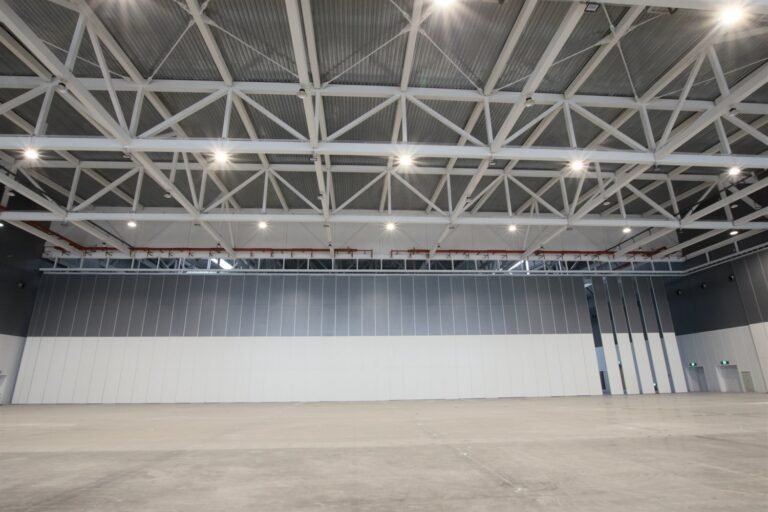
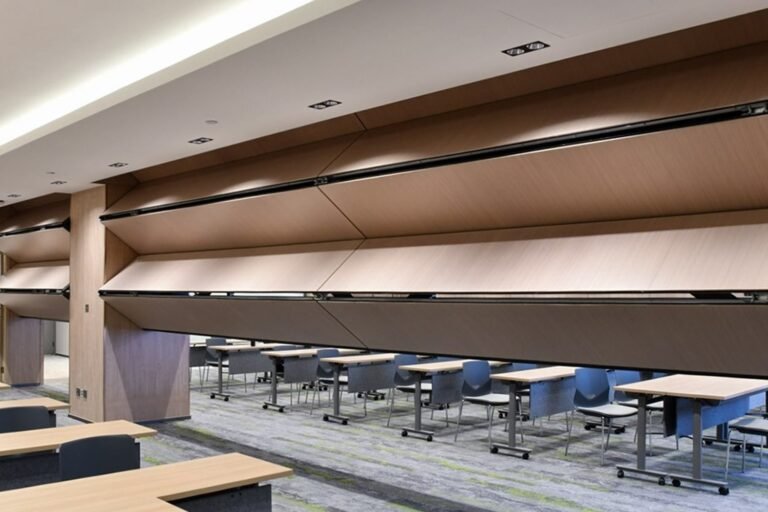
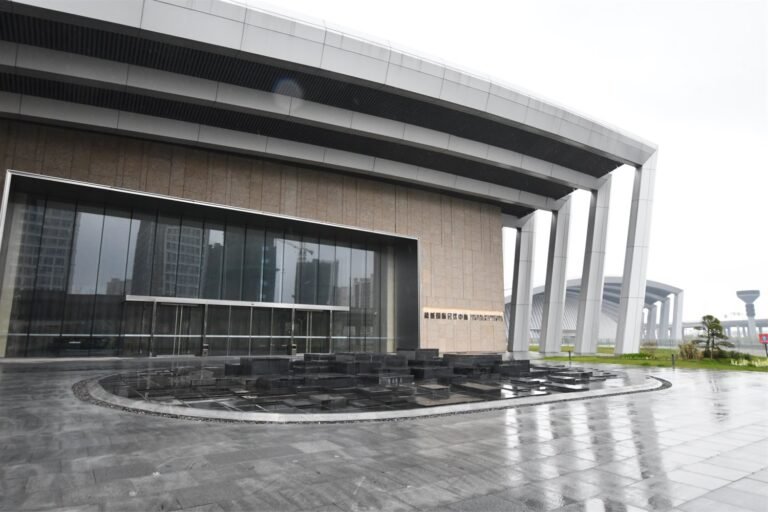
Project References for Large Venues
Acoustic Design for Tall Openings
A high wall is more sensitive to small gaps than a short office partition. The acoustic target should be coordinated with the surrounding building elements. A high-rated movable wall cannot compensate for weak side walls, ceiling flanking paths, open return air paths, or unsealed service penetrations.
For serious convention and performance spaces, the project team should confirm whether the rating requirement refers to panel laboratory performance, installed field performance, or a room-to-room target. These are related, but they are not the same thing.
Information Needed Before Quotation
- Finished floor to ceiling height and clear opening width.
- Section drawings showing ceiling void, support steel, and structural conditions.
- Required acoustic rating or room function.
- Preferred panel parking location and stack direction.
- MEP coordination drawings for the track path.
- Manual, semi-automatic, or fully automatic operation preference.
Common Specification Mistakes in 8-12 Meter Spaces
The first mistake is comparing ultra-high systems by panel area only. Two openings may have a similar square-meter quantity but completely different engineering risk because of height, support conditions, track route, panel parking, and acoustic target. The second mistake is waiting until ceiling work is almost finished before confirming the movable wall route. At that stage, MEP conflicts and support steel changes become more expensive.
The third mistake is treating laboratory acoustic rating as a guaranteed room result. In tall halls, sound can flank through ceilings, side walls, return air paths, and service penetrations. A serious proposal should explain the wall system and also point out interface risks that belong to the building design.
How INDEE Reviews an Ultra-High Inquiry
| Drawing review | Plans, sections, ceiling drawings, and structural information are checked before a system is recommended. |
|---|---|
| Risk identification | Track support, deflection, panel parking, MEP conflicts, and installation access are reviewed as early as possible. |
| System proposal | Panel construction, carrier choice, sealing method, operation method, and finish direction are matched to the actual opening. |
| Quotation data | A more reliable quotation needs dimensions, acoustic target, support conditions, parking requirements, and project schedule. |
FAQ: Ultra-High Operable Partitions
Can a 10 meter movable wall use the same system as an office partition?
No. Tall public spaces normally require different panel construction, carriers, track support, and installation planning. The system must be selected around height, weight, movement, and acoustic requirements.
Is automation required for ultra-high walls?
Not always. Automation is a project decision. Some venues prefer manual systems for maintenance simplicity, while others use automatic systems for selected high-frequency or high-profile openings.
When should the supplier be involved?
As early as possible, ideally before ceiling and structural details are frozen. Late coordination can limit parking options and increase installation risk.
Send Drawings for a Project-Based Recommendation
INDEE can review opening dimensions, ceiling conditions, acoustic targets, panel parking, finish requirements, and operation expectations before recommending a system. This helps the quotation match the building instead of becoming only a square-meter price.
